
Jacksonville Beach offers incredible coastal views, but that same ocean air brings a heavy toll on your home. Salt spray, relentless summer humidity, and thick layers of green algae can quickly coat your siding, deck, and driveway in a dingy film.
When your exterior starts losing its luster, blasting away the dirt seems like the quickest fix. Reaching for maximum power is not always the smartest move for beachside properties. Choosing between pressure washing and soft washing is the key to getting a spotless home without accidentally stripping paint, gouging wood, or damaging your siding.
So, what is the difference between pressure washing vs. soft washing, and which is best for coastal homes? Let us look at how both cleaning methods work so you can keep your property looking great and fully protected against coastal weather.
How Does Pressure Washing Work?
Pressure washing relies on sheer mechanical force to strip away tough grime. Equipment pumps water out at extremely high pressure, usually anywhere from 2,000 to over 4,000 pounds per square inch.
It works great for stubborn, hard surfaces. If you have oil stains on a concrete driveway, deep dirt in patio pavers, or caked-on mud along a brick walkway, a strong stream of water knocks those stains out fast.
Using that same intense stream of pressure washing on softer surfaces can quickly cause trouble. On materials like vinyl siding, stucco, aged wood, or roof shingles, high pressure acts like a sandblaster. It can strip paint, gouge wooden deck boards, crack stucco finish, and drive water deep into wall cavities where mold can grow hidden out of sight.
What Makes Soft Washing Different?
Soft washing takes the opposite approach. Instead of using raw water power, it uses a very low-pressure spray, similar to the strength of a gentle garden hose.
The real secret to soft washing is the specialized cleaning solution mixed into the spray. This safe, eco-friendly solution breaks down organic growths like black algae, green mildew, moss, and microscopic mold spores right at the root. Once the solution kills off the growth, a gentle water rinse clears everything away.
According to exterior maintenance research published through university extension offices like the University of Florida IFAS Extension, high humidity and salt air create an ideal environment for biological growth to rapidly multiply on coastal structures. Soft washing does not just blast away the top layer of dirt that you can see. It sterilizes the surface, which means algae and mold take much longer to grow back compared to water pressure alone.
Which Washing Method Is Best for Coastal Homes?
For most coastal properties, the winning approach is actually a mix of both methods, depending on the exact surface you are trying to clean.
Because salty air speeds up oxidation and traps damp ocean moisture against your walls, delicate materials need soft washing. The low pressure protects your home from water intrusion during routine residential pressure washing while ensuring the salt and sticky humidity stains are completely neutralized. Hard surfaces, on the other hand, love power washing.
Here is a simple breakdown of where each method works best around your beach home:
Soft Washing: Perfect for house siding (vinyl, aluminum, or Hardie board), stucco exterior walls, roof shingles, screened lanais, and painted wood decks.
Pressure Washing: Ideal for concrete driveways, sidewalk entries, pool decks, stone retaining walls, and unpainted brick.
Why Is Salt and Algae Removal So Urgent Near the Coast?
Salt spray carries tiny microscopic salt crystals that land on your siding, windows, and outdoor surfaces daily. When left alone, salt attracts moisture, speeds up corrosion on metal fixtures, and degrades protective coatings on wood and paint.
Combined with Florida’s heat, airborne mold and algae spores cling to that sticky salt residue and thrive. Environmental health and marine studies supported by organizations like Florida Sea Grant highlight how coastal warmth and humidity accelerate rapid organic blooms across local environments. In your home, that means dark streaks on your roof or green film on your siding can spread across an entire wall in just a few short weeks.
Investing in regular pressure cleaning removes those corrosive salts and keeps biological growths from breaking down your building materials prematurely.
How Often Should You Clean Your Coastal Property?
Because beach conditions are tougher than inland weather, waiting several years between cleans is usually a mistake. Most properties in our area benefit greatly from a thorough exterior wash once or twice a year.
Setting up a routine schedule keeps salt from baking into your paint finish during bright summer months and prevents slick mold from making walkways dangerous after afternoon tropical downpours.
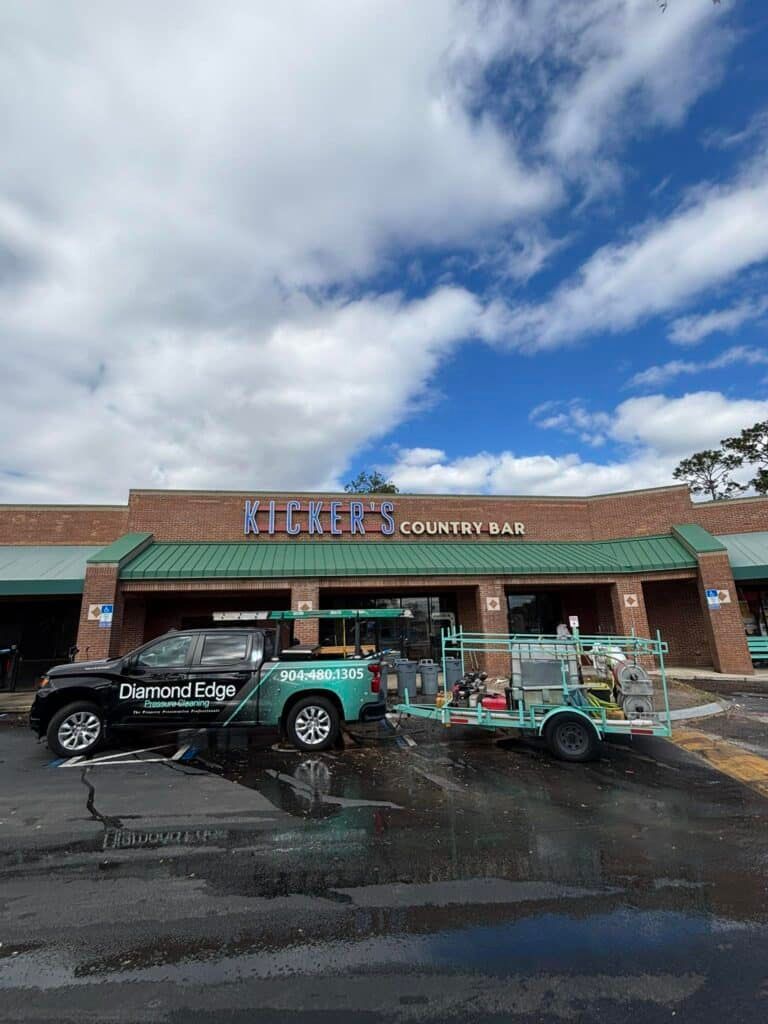
Commercial properties face even higher foot traffic and constant ocean exposure. Professional commercial pressure washing in Jacksonville Beach, FL, keeps business storefronts, outdoor dining patios, and parking lots clean, welcoming, and safe for guests year-round.
Ready to Restore Your Home’s Curb Appeal?
Keeping your beach house clean and protected requires the right balance of gentle soft washing and strong pressure cleaning. Using the wrong setting on your home’s exterior can cause expensive damage, so letting experienced local specialists handle the job gives you total peace of mind.
If you are looking for top-rated pressure washing in Jacksonville Beach, FL, or need a reliable pressure washing service in Jacksonville Beach, FL, Diamond Edge Pressure Cleaning is ready to help. Call us today at (904) 480-1305 to schedule your service or request a free quote. Let us make your property shine like new again!